
ZyntraVexel
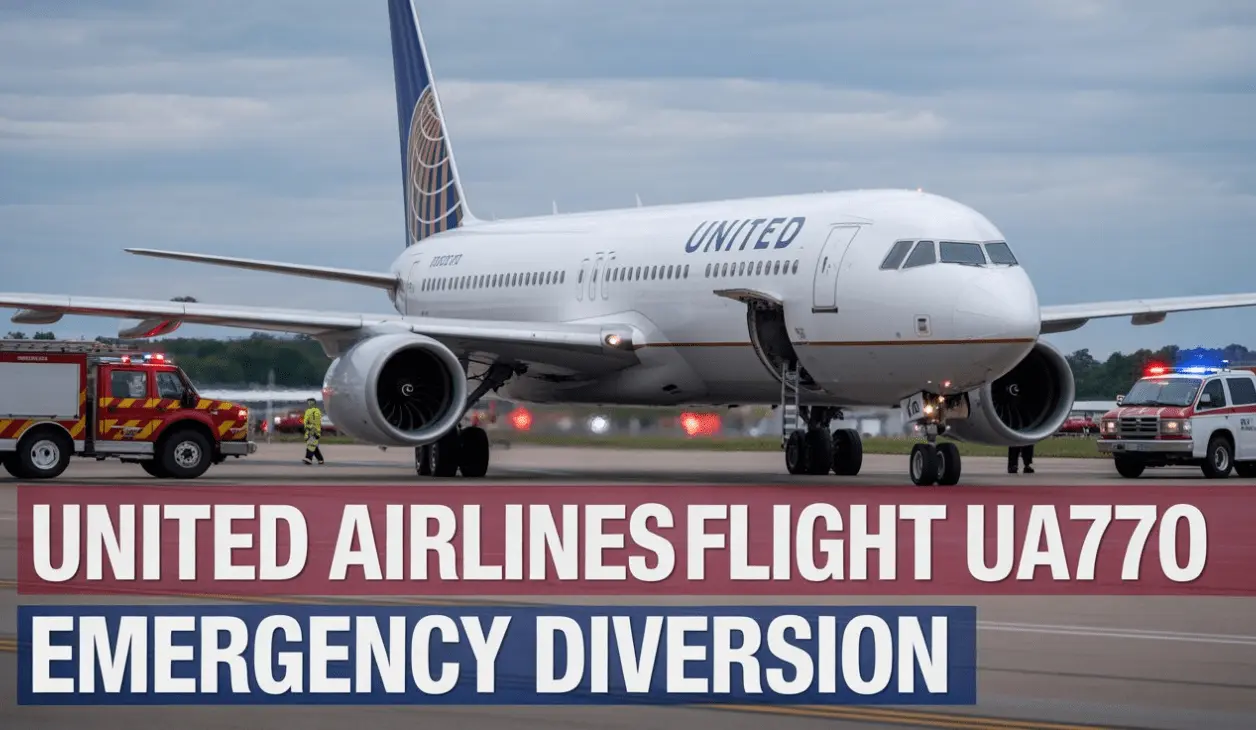
Air travel is generally smooth and predictable, yet sometimes it reminds us just how complex and well-coordinated modern aviation truly is. Such was the case with the united airlines flight ua770 emergency diversion, when a routine trans-Atlantic journey suddenly changed course, highlighting the importance of safety, teamwork, and preparedness.
What Happened on Flight UA770?
On May 27, 2025, United Airlines Flight UA770 a Boeing 787-9 Dreamliner departed from Barcelona bound for Chicago O’Hare. While flying at cruising altitude over the Atlantic Ocean, the pilots reportedly detected a possible cabin pressurization issue. Acting quickly and in line with standard safety procedures, they declared an emergency and decided to divert to a nearby international airport.
Ultimately, the aircraft landed safely at London Heathrow Airport. No injuries were reported, and the passengers disembarked calmly. The united airlines flight ua770 emergency diversion thus stands as an example of aviation safety systems functioning exactly as intended.
Why the Diversion Was Necessary
While the exact cause remains under review, early reports suggest that a sensor or valve in the pressurization system might have triggered a warning. Though not catastrophic, such alerts demand immediate attention. In aviation, even a minor warning can prompt a precautionary landing because safety always comes before schedule.
The decision to divert to Heathrow a major, well-equipped hub was based on several factors, including proximity, runway length, emergency facilities, and technical support. The united airlines flight ua770 emergency diversion was therefore a proactive move, not a sign of danger, but of precaution.
Passengers’ Experience Onboard
Imagine boarding a long-haul flight expecting an eight-hour journey, only to hear the captain announce an emergency diversion. That was the reality for the passengers of UA770. Despite the unexpected news, the cabin remained calm. The crew provided timely information, reassured travelers, and followed every step of the emergency checklist.
Oxygen masks were not deployed, and the aircraft maintained stable pressurization throughout. Once on the ground, United Airlines arranged accommodations, re-booked flights, and provided meal vouchers for the affected passengers. For many, the united airlines flight ua770 emergency diversion became a story of professionalism and composure rather than fear or chaos.
The Role of Crew and Technology
Modern aircraft are equipped with sophisticated systems designed to detect even the smallest technical irregularities. When such a signal appears, the flight crew must quickly assess whether it poses a potential risk. In the case of Flight UA770, those systems performed exactly as expected.
Equally important was the human factor the pilots’ training, decision-making, and communication. In commercial aviation, crews undergo continuous simulator sessions that replicate emergencies just like this. The seamless cooperation between pilots and ground controllers ensured a smooth and safe outcome.
Thus, the united airlines flight ua770 emergency diversion is not just a headline; it’s a demonstration of how well-practiced safety measures protect lives.
What This Means for Aviation Safety
Every air incident, big or small, reinforces a fundamental truth: preparedness saves lives. The UA770 diversion underscores key points about the aviation industry’s commitment to safety:
- Early detection works. Monitoring systems caught the issue before it became a hazard.
- Training makes the difference. The crew’s rapid and clear response prevented panic.
- Infrastructure matters. Choosing Heathrow ensured immediate access to expert technicians and emergency resources.
- Passenger care is essential. How an airline responds after an event defines its reputation as much as the incident itself.
Even though emergency diversions are rare, they’re proof that safety protocols are constantly being tested and refined.
Lessons for Travelers
While few passengers will ever experience an in-flight diversion, it’s still useful to understand what happens during one. The united airlines flight ua770 emergency diversion teaches travelers several important lessons:
- Trust the process. Crew members are highly trained to handle emergencies calmly and efficiently.
- Follow instructions. Listening carefully and cooperating during announcements keeps everyone safe.
- Expect some delays. Diversions can disrupt travel plans, but they exist to protect you.
- Stay informed. After landing, airlines usually provide updates, assistance, and rebooking options.
Knowing this can make you feel more confident about flying — even when things don’t go exactly as planned.
Common Questions About Flight Diversions
Q: Were there any injuries during the united airlines flight ua770 emergency diversion?
A: No. All passengers and crew landed safely and disembarked without medical issues.
Q: Why did the pilots choose London Heathrow?
A: Heathrow had the nearest facilities capable of handling a Dreamliner and providing quick technical checks.
Q: Does a diversion mean something went seriously wrong?
A: Not always. Diversions are precautionary measures that prioritize safety even if the issue is minor.
Q: Should passengers be worried about future flights?
A: Not at all. Events like this show that the aviation safety network from technology to training functions exactly as it should.
Final Thoughts
The united airlines flight ua770 emergency diversion reminds us that aviation safety is about preparation, not panic. A single sensor alert prompted swift, professional action from a crew trained to handle the unexpected. From the decision to divert, to the smooth landing, to the care shown afterward, every part of the process worked as designed.
For passengers, this event serves as reassurance: airlines do not take risks when it comes to safety. Even when something unexpected happens, the systems and people in place ensure the best possible outcome.
In the end, Flight UA770’s diversion was less a story of danger and more a story of control a clear example that in modern aviation, safety is always the top priority.
About the Author