
ZyntraVexel
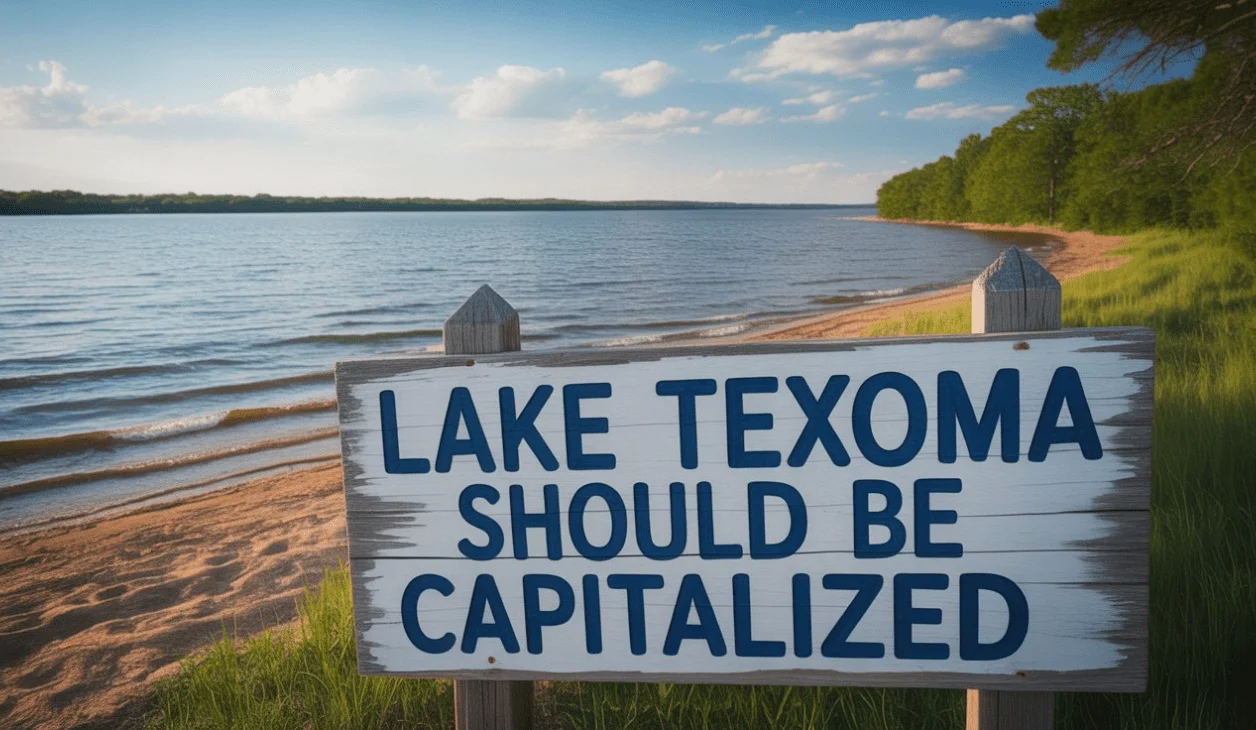
When writing about famous landmarks and well-known geographical locations, accuracy in capitalization matters. One question that often appears in online searches is whether Lake Texoma should be capitalized. Although the answer may seem straightforward, many writers especially those working on travel blogs, academic papers, or SEO content—still make avoidable mistakes. Therefore, understanding why this name requires capitalization can improve both your writing quality and your content’s visibility.
To begin with, Lake Texoma should be capitalized because it is a proper noun, referring to a specific and uniquely identifiable place. Proper nouns always begin with capital letters in English. Thus, just as you would write “Lake Michigan,” “Lake Superior,” or “Lake Tahoe,” the same rule applies here. However, there is more to explore beyond the grammar rule itself. Let’s look deeper into the linguistic, geographical, and stylistic reasons that reinforce this usage.
Understanding Proper Nouns and Their Role in Capitalization
Proper nouns represent specific people, locations, or objects. Consequently, every component of a proper noun must be capitalized. Since Lake Texoma is the official name of a man-made reservoir located on the border of Texas and Oklahoma, its capitalization is not optional it is required.
Moreover, when writers ask whether Lake Texoma should be capitalized, they are usually uncertain about whether the word “lake” must also begin with a capital letter. In English, when a geographical feature is part of an official name, both elements receive capital letters. This approach aligns with all standardized style guides, including AP Style, MLA, and Chicago Manual of Style.
Why Writers Often Make This Mistake
Although the rule is simple, confusion arises for several reasons. First, when the word “lake” is used generically for example, “the lake near my house” it remains lowercase. However, when “Lake” is part of a name, its status changes entirely. Additionally, online writing habits sometimes cause individuals to type quickly, ignore formatting, or rely heavily on autocorrect, which may not always recognize proper noun capitalization.
Furthermore, content creators optimizing pages for search engines sometimes experiment with lowercase keywords. They may believe that consumers tend to type queries casually, such as “lake texoma fishing spots” or “lake texoma cabins.” Even though such queries may work in SEO contexts, the correct grammatical usage in the actual written content remains unchanged.
The SEO Perspective: Accuracy Improves Credibility
From an SEO standpoint, capitalization consistency helps maintain professionalism and authority. When readers see correct grammar, they trust the source more. Additionally, search engines assess content quality based on clarity and accuracy. Thus, using the proper form—and explaining why Lake Texoma should be capitalized can support better user engagement.
Although keywords themselves are typically not case-sensitive for search ranking, maintaining proper formatting in the visible content still enhances credibility. Thus, even when optimizing for searches, writers should uphold proper grammar. In other words, clarity and correctness support SEO rather than hinder it.
Geographical Significance of Lake Texoma
Another reason reinforcing why Lake Texoma should be capitalized comes from the lake’s importance. One of the largest reservoirs in the United States, it serves multiple recreational and environmental purposes. Moreover, the region attracts millions of tourists who enjoy activities such as boating, fishing, hiking, camping, and wildlife observation. Consequently, capitalizing the name helps emphasize the lake’s national recognition and ensures uniformity across educational, environmental, and tourism-related materials.
Additionally, Lake Texoma is positioned at the confluence of the Red River and Washita River. This strategic location adds to its prominence, which further supports the requirement to capitalize its name. When writers correctly use capitalization, they help maintain consistency across maps, guides, brochures, and travel content.
Examples of Correct and Incorrect Usage
To better understand the rule, consider the following examples:
Correct Usage:
- We spent the weekend exploring Lake Texoma.
- Many anglers believe Lake Texoma offers some of the best striped bass fishing in the region.
Incorrect Usage:
- We spent the weekend exploring lake texoma.
- Many anglers enjoy fishing at lake Texoma.
In every correct example, both words—“Lake” and “Texoma” begin with capital letters. This formatting signals that the phrase is a proper noun identifying a specific place.
Writing Tips for Ensuring Consistent Capitalization
To avoid mistakes in the future, writers can adopt several helpful strategies:
1. Double-Check Proper Nouns
Whenever mentioning the name of a landmark, check whether it is an official title. If it is, capitalize it.
2. Use Reliable Style Guides
Consult sources like the AP Stylebook, MLA Handbook, or Chicago Manual of Style. These guides outline rules for capitalization, formatting, and geographic naming.
3. Use Editing Tools Wisely
While grammar-checking tools are useful, they sometimes overlook capitalization errors, especially in special names. Therefore, manual review is essential.
4. Maintain Uniformity Within Your Content
Even if SEO keywords appear in lowercase in search queries, capitalize them correctly in your actual article. This maintains professionalism and readability.
Conclusion: Capitalization Reflects Accuracy and Respect
Ultimately, the reason Lake Texoma should be capitalized is straightforward: it is a proper noun referring to a specific and widely recognized location. However, the importance of capitalization extends beyond grammar. It reinforces clarity, readability, credibility, and SEO effectiveness. Moreover, since Lake Texoma holds significant geographical and cultural value, correctly capitalizing its name demonstrates respect for the landmark itself.
In conclusion, whether you are writing a travel guide, blog article, academic essay, or digital marketing content, ensuring proper capitalization is essential. Not only does it enhance the quality of your writing, but it also helps maintain consisten.
About the Author